Signature Finish Group Camberwell

Commercial painting,
finished before you open.

Retail, offices, hospitality and common property. The painting is rarely the hard part — the scheduling is.

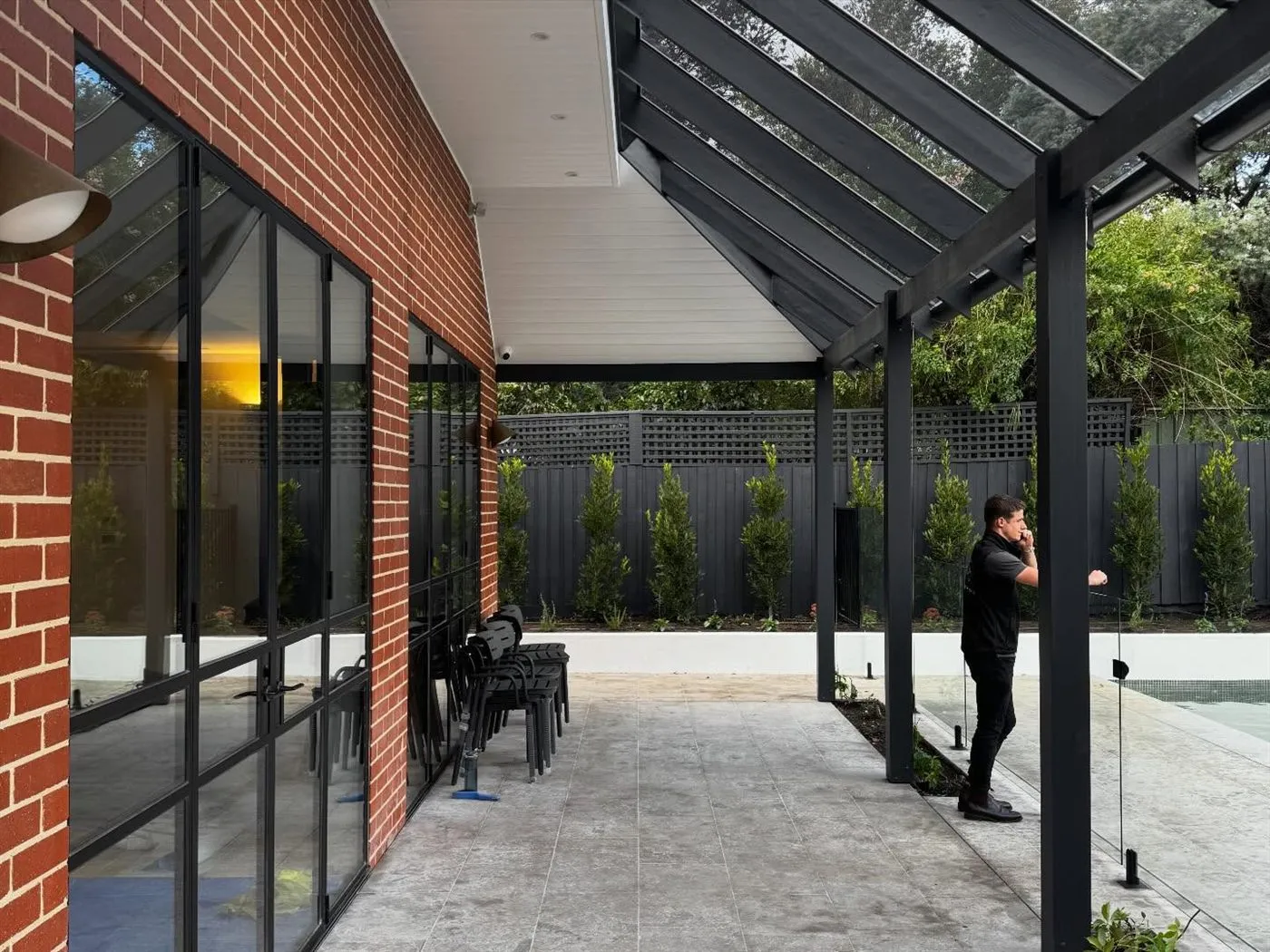
Brick courtyard beneath a black steel-framed glazed pavilion and pergola.

What actually decides a commercial job

A scheduling problem
that happens to involve paint.

On a house, the programme bends around the work. On a trading site, the work bends around the programme — and a contractor who has not planned for that will stall the job on day two.

A shop cannot close for a week. An office cannot lose a floor of desks. A restaurant cannot skip a Friday service. So the work happens early, late, or across a weekend, in stages small enough that the space is genuinely usable again at the end of every shift. Not sheeted up and half-finished — usable.

That costs more per hour than a straight daytime run, and we price it as what it is rather than quoting a day rate and discovering the constraint later. A quote that has not asked about your trading hours has not understood the job.

The four kinds of site

Each one runs
differently.

01

Retail and shopfronts

Out-of-hours work, almost always. A shopfront gets stripped, prepared and coated between close and open, or across a weekend, and it has to be genuinely finished each time we leave — no drop sheets, no taped edges, no ladder left against the glass on a Saturday morning.

Tessellated tiling, original steel frames and heritage shopfront detail get protected rather than painted around carelessly. On a strip like High Street or Maling Road those details are often irreplaceable.

02

Offices and workplaces

Staged around occupancy: floor by floor, wing by wing, or after hours where the fit-out demands it. Ceiling grids, cable trays, sprinkler heads and exit signage all need masking or removal, and none of it appears on a quote priced by wall area.

High-traffic corridors get scrub-resistant coatings rather than a standard low-sheen that marks the first time a trolley touches it.

03

Owners corporation and strata

Common property is a different client. The decision sits with a committee rather than a person, which means the scope has to be written in a form that can actually be taken to a meeting and voted on — itemised, staged, with a programme and a figure that will not move.

Residents keep their access throughout: stairwells done in halves, lobbies overnight, car park soffits on weekends. We also expect to attend the meeting if that is what gets the job approved.

04

Hospitality

The tightest windows of all. A dining room repainted between Sunday close and Tuesday service, with every surface cured enough to be wiped down before food goes back in the room.

Product selection matters more here than anywhere: low-odour, fast-curing, and washable, because the surfaces get cleaned hard and often.

What you can expect on file

The paperwork
done properly.

01

$5 million public liability

Current certificates provided with every quote, not promised and produced later. Most commercial sites will not let us start without them, and rightly.

02

A scope a committee can approve

Itemised by area, naming the product, the number of coats and the sheen level, with a staged programme. Written to be read by people who are not tradespeople.

03

Site inductions and SWMS

We complete your induction and provide safe work method statements before the first day rather than on it.

04

One named contact

The person who quoted it is on site and answers the phone. Not a call centre, and not a different crew each week.

05

Seven-year workmanship warranty

The same warranty we put on a house, issued in writing at handover.

Next step

Tell us about the site.

Send through a few photos and what you have in mind. We come back within one business day with a written, itemised scope — the product, the number of coats and the sheen level, room by room or elevation by elevation.

Call Get a quote