Signature Finish Group Camberwell

Interior painting,
where the light finds everything.

Walls, ceilings, doors and trim. Inside a house there is nowhere for a poor substrate to hide, because the light moves across it all day.

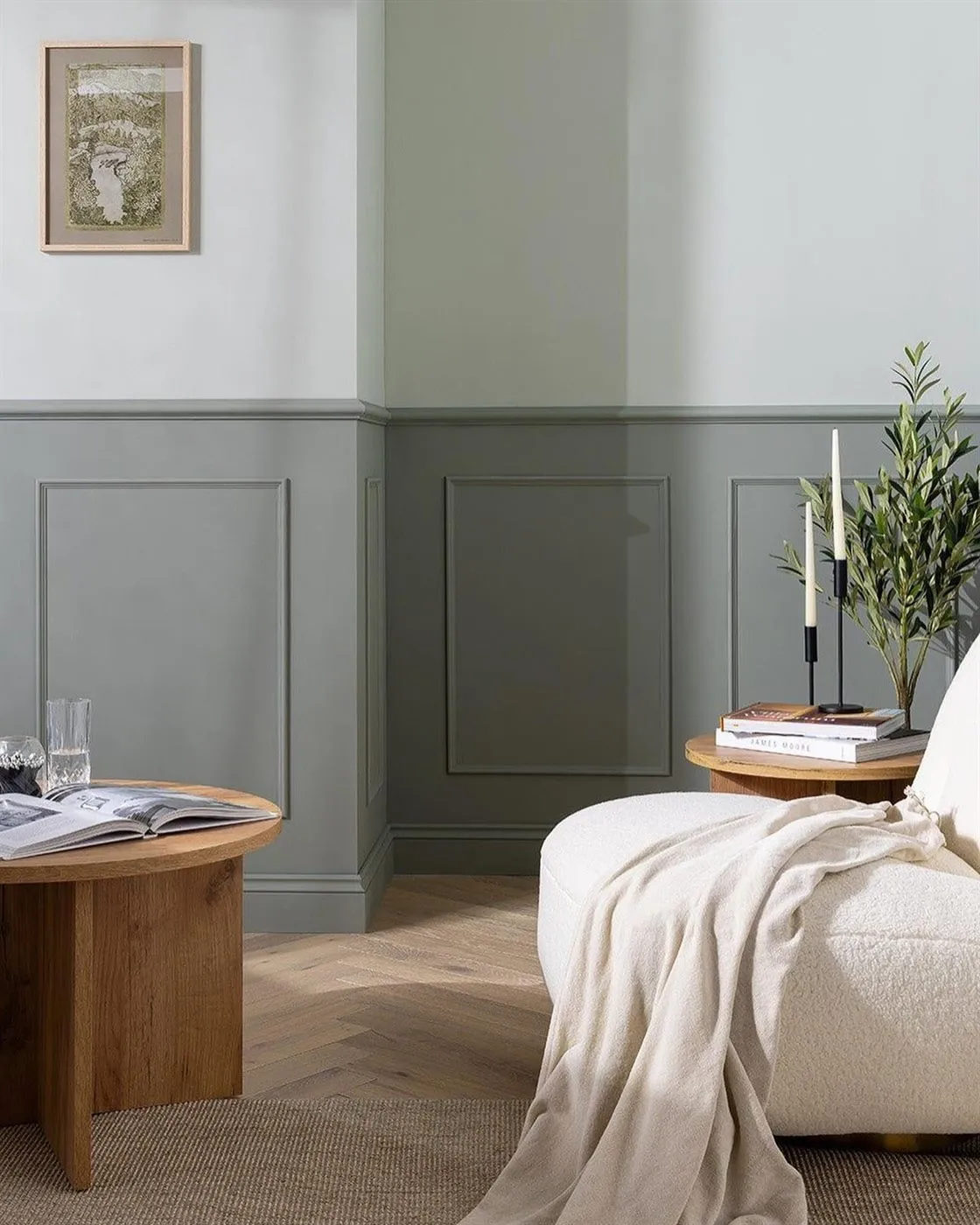
Bedroom with sage-green panelled wainscoting, framed artwork and an oak side table.

Why interiors are unforgiving

The paint is
the easy part.

An interior repaint is mostly preparation. By the time a finish coat is opened, the outcome has already been decided by what happened to the surface underneath it.

The reason is light. A wall is lit from a window at one end and a downlight at the other, and both rake across it at a shallow angle for part of every day. That angle finds everything — a patch sanded flat but not feathered, a roller lap left to dry, a nail hole filled proud. On the day of handover under a flat overhead light it all looks fine. At four in the afternoon in June it does not.

So we sand under raking light rather than overhead light, which means running a work lamp along the wall at the angle the room will actually be lit from. It is slow, it finds defects nobody wants to find at that stage, and it is the single thing that separates an interior that looks deliberate from one that looks painted.

What an interior covers

Four surfaces,
four different jobs.

01

Ceilings

The hardest surface in the house and the one most often rushed. A ceiling is lit almost entirely from below at a raking angle, which makes it merciless about roller marks, and it is the surface where stopping and restarting mid-run shows most.

It gets cut and rolled in continuous runs, wet edge maintained, and where a ceiling has been patched we assess whether the patch will flash through the finish before we coat it rather than after.

02

Walls

Substrate assessment first: what is already on there, whether it is sound, and whether the previous coating will take another. Old oil-based enamel under new water-based paint will not key and peels in sheets within a year or two, so it gets identified and primed for adhesion rather than coated over.

Then filling, sanding under raking light, sealer where the substrate demands it, and build coats. Minimum three, more where a colour change needs it.

03

Doors, architraves and skirting

Where brush finish shows. Trim sits at eye level and catches side light along its whole length, so brush marks, runs at the bottom of a door and a wandering line along an architrave are all visible from across the room.

On a heritage house the trim is usually the slowest part of the job by a wide margin — deep mouldings, moulded architraves and detailed skirting are cut by hand, and there is no method that makes that fast.

04

Panelling and specialist finishes

Wainscoting, panelled walls, built-in joinery and the finishes that are not paint at all — mineral limewash, Venetian plaster, French and colour wash, metallic and pearl.

These are approved on sample boards before anything reaches a wall, because they cannot be corrected after the fact. Limewash in particular is applied wet on wet; a join that dries before the next pass meets it leaves a permanent lap line.

Living in the house

You do not have
to move out.

01

Room by room

We work in sequence rather than opening up the whole house, so you keep somewhere to live while the job runs. The exception is a whole-house repaint on a tight programme, and we will tell you that at the quote.

02

Sealed and protected

Active areas are sealed off, floors and furniture covered, and the site swept at the end of every day rather than the end of the job.

03

Low-VOC throughout

Modern water-based products throughout so the house stays liveable. The smell is gone in hours rather than days.

04

Colour in your light

Sample pots, two coats, on your wall, looked at morning and evening. Colour chosen under a showroom downlight is colour chosen twice.

Next step

Tell us about the rooms.

Send through a few photos and what you have in mind. We come back within one business day with a written, itemised scope — the product, the number of coats and the sheen level, room by room or elevation by elevation.

Call Get a quote